Product-Led AI Engineering: Builder Patterns
A practical playbook for turning AI capabilities into useful, trusted products through fast value, adaptive systems, disciplined measurement, and explainable experiences.
presentation notesTechnical blog
Essays, local notes, and presentation companions on AI agents, inference, EvalOps, data integration, AI UX, and startup AI systems.
Presentations
Talk artifacts with an accessible written companion—not blog posts in disguise.
A practical playbook for turning AI capabilities into useful, trusted products through fast value, adaptive systems, disciplined measurement, and explainable experiences.
presentation notesA 24-slide exploration of DeepSeek-R1 through reinforcement learning, generalization, emergent reasoning, model comparison, and the reliability challenges of tool-using AI agents.
presentation notesA 19-slide practical introduction to GraphRAG for sparse relationships, structural context, multi-hop reasoning, knowledge-graph construction, storage, and graph retrieval.
presentation notesPinned
A pinned GraphRAG essay on using graph attention to make retrieval context more query-sensitive for multi-hop reasoning.
A pinned agent-decision essay on Language Agent Tree Search, deliberation, and inference-time search for harder LLM tasks.
A pinned Azure AI Search essay on metadata filters as a practical retrieval control for production RAG systems.
Latest
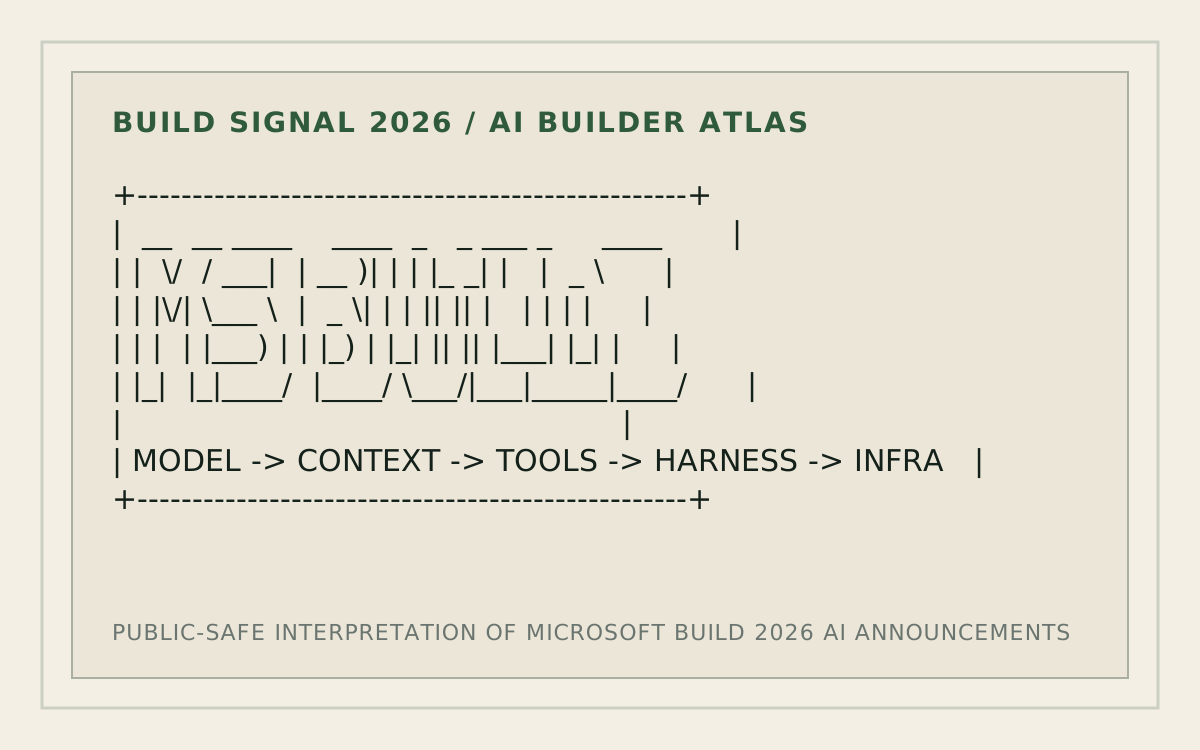
Intent: map Microsoft Build 2026 AI announcements into builder-ready samples across model, context, tools, harness, and infrastructure.
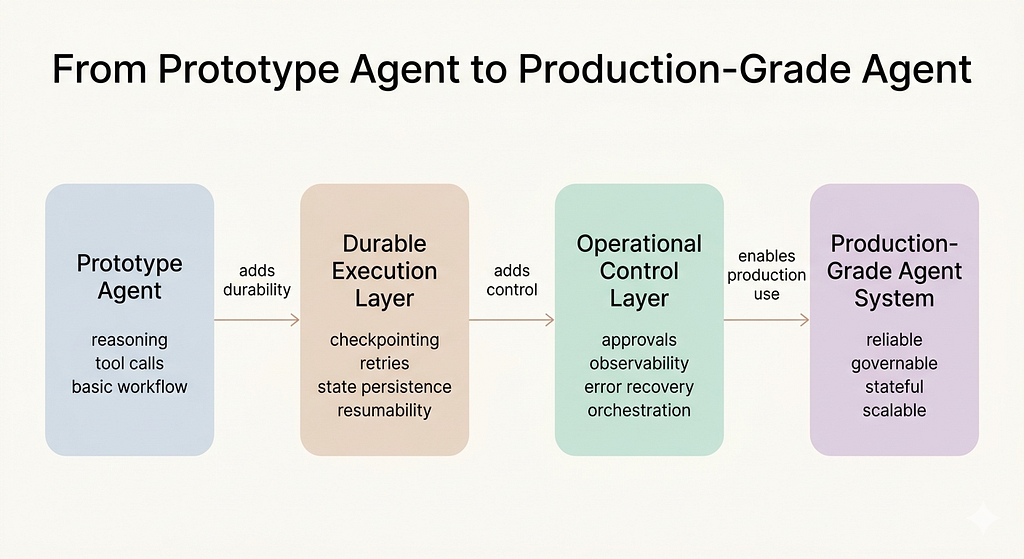
How durable runtime contracts bound long-running agent behavior with state, approvals, checkpointing, and recovery.
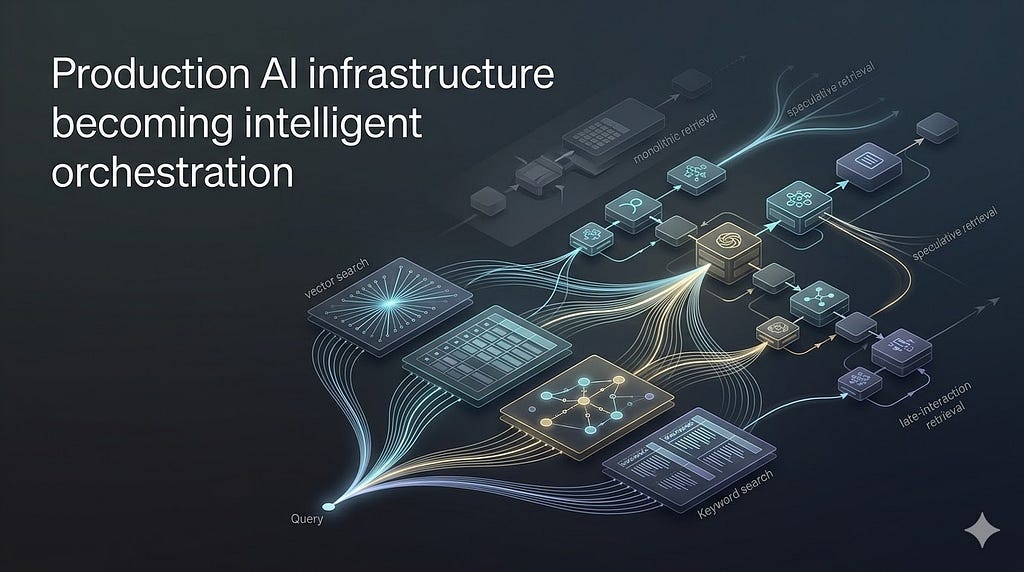
A systems view of RAG moving toward composable retrieval, late interaction, graph reasoning, freshness, and orchestration.
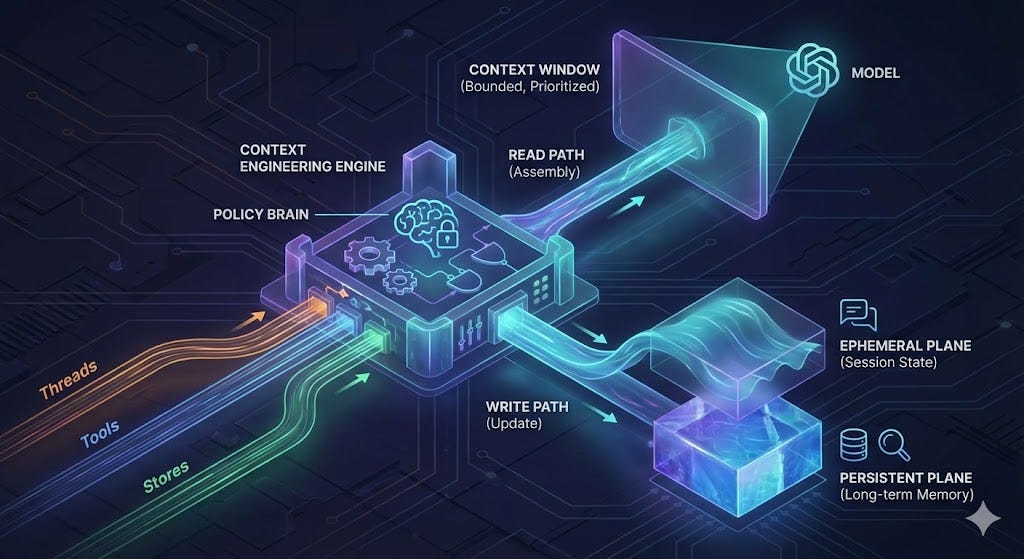
Context engineering as a bounded prompt-assembly control surface for short-term memory, persistent memory, retrieval, and policy.
Inference latency as a topology problem: placement, routing, queues, batching, and system-level control around model serving.
A practical RAPTOR pattern for sparse retrieval when relevant context is distributed across many documents.
Notes on using features and segmentation as safer inputs for reasoning-based personalization systems.
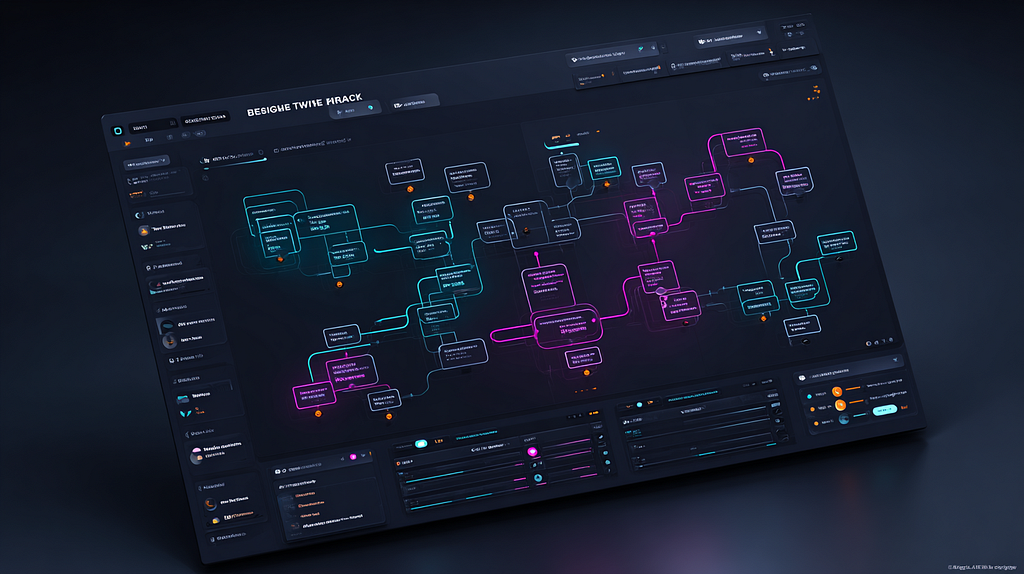
Typed workflow graphs, multi-agent fan-out, HITL, telemetry, and UI feedback loops in a credit-underwriting demo.
Typed workflow graphs, fan-out/fan-in execution, checkpointing, human approval gates, and telemetry for production-grade agent systems.
Adaptive interface notes on turning user intent and engagement context into typed UI schemas that remain governable.
A local pre-prompt guardrail using Presidio and a small CPU model to reduce PII exposure before LLM calls.
Notes on why agentic AI, assisted coding, and AI governance require unified and organized data foundations.
Why useful AI agent products often require domain workflow discovery and deployed engineering loops.
Implementation notes on Azure agent building blocks, deployment tradeoffs, and production-oriented agent patterns.
A practical Advanced RAG follow-up covering data preparation, embeddings, retrieval strategy, synthesis, and prompt conditioning.
A failure-mode map for RAG systems across retrieval, augmentation, and generation, with concrete examples of where pipelines lose relevance.